

Grief During the Holidays: How to Cope With Loss This Season
The decorations go up earlier every year. Somewhere between the first holiday ad and the first invitation, you realize this season is going to be hard in a way other people may not see.
Grief during the holidays often feels heavier than grief the rest of the year. There is more to attend, more togetherness on display, and more moments that quietly point to who is missing. If you have been dreading the next six weeks, you are not being dramatic, and you are not doing grief wrong.
Below, I’ll share why this season tends to amplify loss, what tends to help, and how to tell when it may be time for more support.
Why the Holidays Make Grief Feel Heavier
Holidays are built out of repetition. The same table, the same recipes, the same songs, the same people in the same chairs. That repetition is exactly what makes them meaningful, and exactly what makes absence so loud.
A few things tend to stack up at once:
- Traditions become reminders. The ritual you looked forward to is now the thing that marks what changed.
- Grief becomes public. Most of the year you can grieve privately. In December you are grieving at parties, at dinners, in front of relatives.
- The contrast is sharp. Everywhere you look, other people seem to be celebrating, which can make your sadness feel out of place.
- There is more to manage. Travel, hosting, shopping, and family logistics all take energy that grief has already spent.
- Old roles shift. Someone else carves the turkey now. Someone else hosts. Every adjustment is a small, practical reminder.
None of this means you are moving backward. Grief is not a straight line from worse to better. It comes in waves, and the holidays are a predictable high tide.
What Holiday Grief Can Look Like
Grief during the holidays does not always look like crying. It can show up as:
- Dreading invitations, or saying yes and then wanting to cancel
- Irritability, short patience, or snapping at people you love
- Exhaustion that sleep does not fix
- Feeling numb or going through the motions of celebrations
- Guilt for laughing, enjoying yourself, or having a good day
- Throwing yourself into busyness so there is no quiet to sit in
- Physical symptoms like headaches, stomach trouble, or trouble sleeping
If you lost someone months or even years ago, a hard holiday season does not mean your grief has restarted. Anniversaries, birthdays, and holidays reliably bring loss back to the surface. That is how grief works.
The First Holiday Season Without Them
The first year is its own experience. You are not only grieving the person. You are also meeting every tradition for the first time without them, and you have no idea in advance which ones will level you.
Some people find the anticipation worse than the day itself. The week of dread leading up to Thanksgiving can be heavier than Thanksgiving. If that is you, it can help to decide in advance how you want to spend the day, rather than leaving it open and hoping you feel okay when it arrives.
You also do not have to decide now what you will do forever. This year’s choices are just this year’s choices.
Ways to Get Through the Season
There is no technique that removes grief during the holidays, and I would not offer one. But a few things tend to make the season more survivable:
- Decide what you are keeping, changing, and skipping. Go through your usual traditions and sort them. Keeping some can be comforting. Changing one, like eating somewhere new, can take the pressure off. Skipping one is allowed.
- Give yourself an exit. Drive separately. Plan to arrive late or leave early. Knowing you can go often makes it possible to stay.
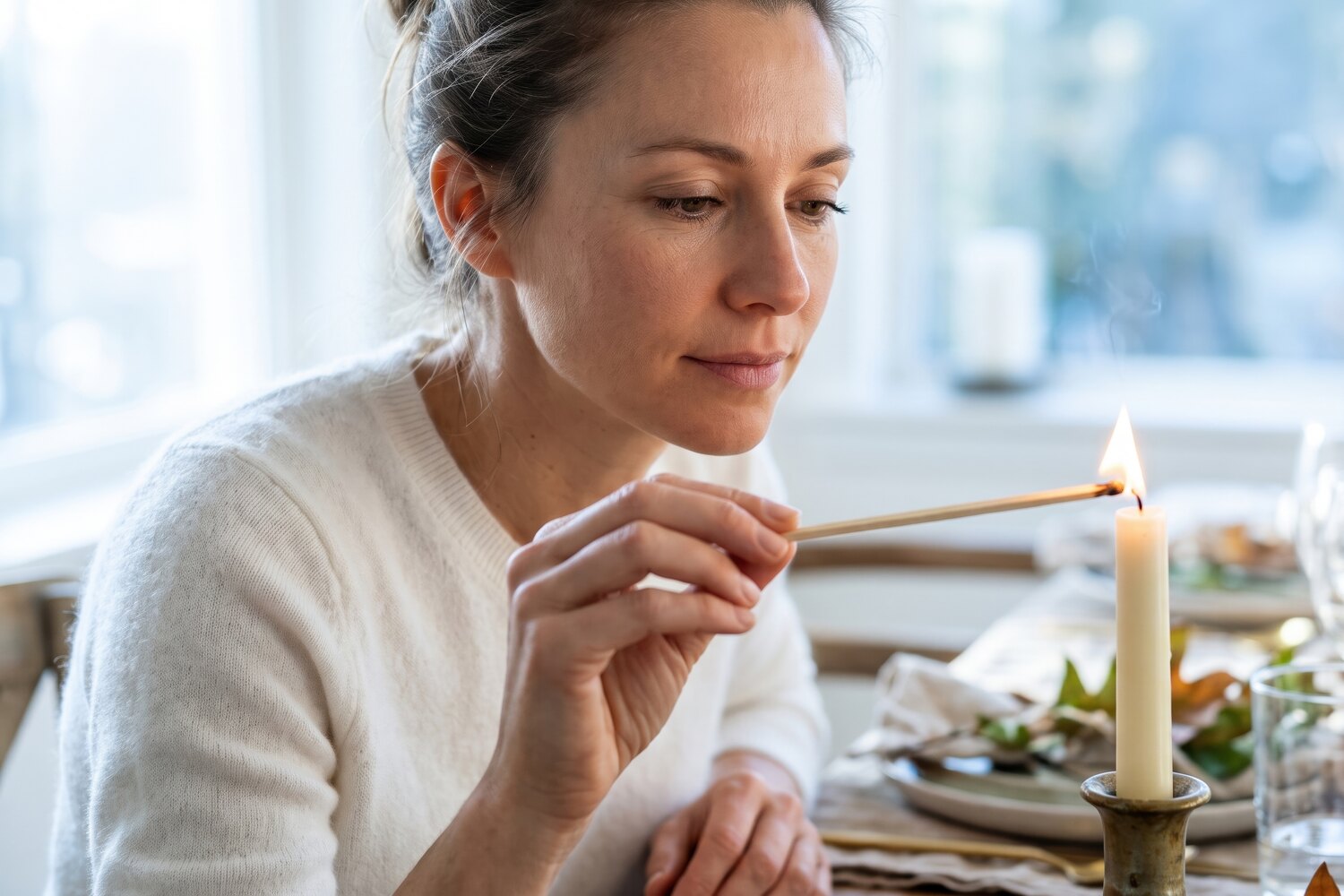
- Make room for them on purpose. Light a candle, cook their dish, set out a photo, give to a cause they cared about. Including the person deliberately is often easier than being ambushed by their absence.
- Lower the bar. The gifts can be simpler. The meal can be smaller. The cards can wait a year.
- Tell one person the truth. Not everyone at the table needs to know how you are doing. One person who does can change the whole day.
- Protect your basics. Sleep, food, and some movement will not fix grief, but going without them makes everything harder.
- Let good moments be good. Enjoying a day does not dishonor anyone or mean you have moved on.
Telling Family What You Need
A lot of holiday pain comes from the gap between what people offer and what you actually need. Relatives often want to help and have no idea how, so they either avoid the subject entirely or push you to be festive.
Simple, direct phrasing tends to work better than hinting:
- “I want to come, and I may need to leave early.”
- “I’d love it if we talked about Dad. I don’t want to pretend it’s a normal year.”
- “I’m not up for hosting this year. Could we do it at your place?”
- “If I get quiet, it’s not about you. I just need a minute.”
You may also have relatives who grieve very differently than you do. One person wants every tradition unchanged, another cannot bear them. Both are normal. Naming that out loud ahead of time can prevent a lot of holiday conflict.
When Grief During the Holidays Needs More Support
Grief is not a disorder, and most people do not need therapy to grieve. But support can make a real difference when:
- You have been stuck in the same intense pain for months with no shifts at all
- You cannot function at work, at home, or in your relationships
- You are avoiding every reminder of the person, or cannot engage with anything else
- You feel persistently hopeless or numb
- You are drinking more, or leaning on something else to get through
- The loss was sudden, traumatic, or complicated by a difficult relationship
If you ever have thoughts of harming yourself, please call or text 988 to reach the 988 Suicide & Crisis Lifeline, or go to your nearest emergency room. Organizations like the Hospice Foundation of America also offer free grief resources.
How Grief Counseling Helps During the Holidays
Grief counseling is not about getting over the loss or reaching some finish line. It is a space where you do not have to manage anyone else’s feelings about your grief, and where nothing you say is too much.
In my work, I draw on grief-focused approaches along with cognitive behavioral therapy (CBT) and acceptance and commitment therapy (ACT), shaped around what you need. During the holidays in particular, that often looks like:
- Planning for specific days you are dreading, before they arrive
- Working through guilt, anger, or relief that feels complicated to admit
- Practicing what you want to say to family, and what you do not owe anyone
- Making sense of grief that resurfaced long after a loss
- Finding ways to carry the person with you rather than leaving them behind
If you want to know more about what sessions are actually like, I’ve written about what to expect in grief counseling, and you can read more about my grief counseling services in Los Angeles.

Frequently Asked Questions
Why is grief worse during the holidays?
Holidays are built on traditions and gatherings that highlight who is missing. There are more reminders, more social obligations, and more pressure to appear happy, which can make grief feel more intense than it does the rest of the year.
Should I keep our usual holiday traditions after a loss?
There is no right answer. Many people keep the traditions that feel comforting, change one or two, and skip the ones that feel unbearable this year. You can decide again next year.
Is it normal to feel grief years after someone died?
Yes. Holidays, anniversaries, and birthdays commonly bring grief back to the surface long after a loss. It does not mean you are not healing.
How do I support someone who is grieving during the holidays?
Say the person’s name, ask what would help rather than assuming, and make it easy for them to decline or leave early. Checking in after the holidays matters just as much.
Do you offer virtual grief counseling in Los Angeles?
Yes. I offer virtual sessions as well as in-person sessions at my West Los Angeles office, which many clients find easier during a busy holiday season.
You Don't Have to Get Through This Season Alone
If this year’s holidays feel like something to survive rather than enjoy, that is worth taking seriously. Grief during the holidays is common, it is temporary in its intensity even when the loss is permanent, and it is much lighter when someone is walking through it with you.
I offer grief counseling in Los Angeles, in person and virtually, and every new client starts with a free consultation call. If you’d like support before or during this season, reach out to book a free consultation.

Leave a Reply